
Hiring a WordPress developer can be a pivotal step in creating a successful online presence for your business or personal project. WordPress, being a popular content management system, offers flexibility and ease of use. A skilled developer can help you take full advantage of these benefits. Here’s a comprehensive guide to hiring a WordPress developer in the UK. A professional WordPress developer working on a custom website theme.

1. Understanding Your Needs
Before you begin the hiring process, it’s crucial to understand your specific requirements. Consider the following questions:
-
What is the scope of your project? Are you looking for a simple blog, an e-commerce site, or a more complex web application?
-
What features do you need? Do you require custom plugins, themes, or any specific integrations?
-
What is your budget? Knowing your financial limits can help you narrow down potential candidates.
-
What is your timeline? Determine when you need the project completed to ensure the developer can meet your deadline.

2. Skills to Look For
When hiring a WordPress developer, consider the following essential skills and qualities:
-
Proficiency in PHP, HTML, CSS, and JavaScript: These are the foundational languages for WordPress development.
-
Experience with WordPress themes and plugins: The developer should be adept at creating and customizing themes and plugins.
-
Understanding of SEO best practices: This ensures your website is optimized for search engines.
-
Problem-solving skills: The ability to troubleshoot and resolve issues efficiently is key.
- Good communication: Clear communication is vital for understanding project requirements and updates.

Technical “Must-Haves”
The baseline for a UK-based developer is shifting towards modern JavaScript and performance-first development.
| Skill Category | Essential Requirement | Why it matters in 2026 |
| Core PHP & MySQL | Proficiency in PHP (8.x+) and custom database queries. | Essential for custom plugin development and deep site troubleshooting. |
| Modern JavaScript | Deep knowledge of React.js and ES6+. | Necessary for building custom Gutenberg blocks and interactive interfaces. |
| Block-First Dev | Expertise in theme.json and Full Site Editing (FSE). |
UK agencies now prioritise lean, block-based themes over heavy page builders. |
| Version Control | Mastery of Git (GitHub/Bitbucket). | Critical for security and collaboration in UK agency environments. |
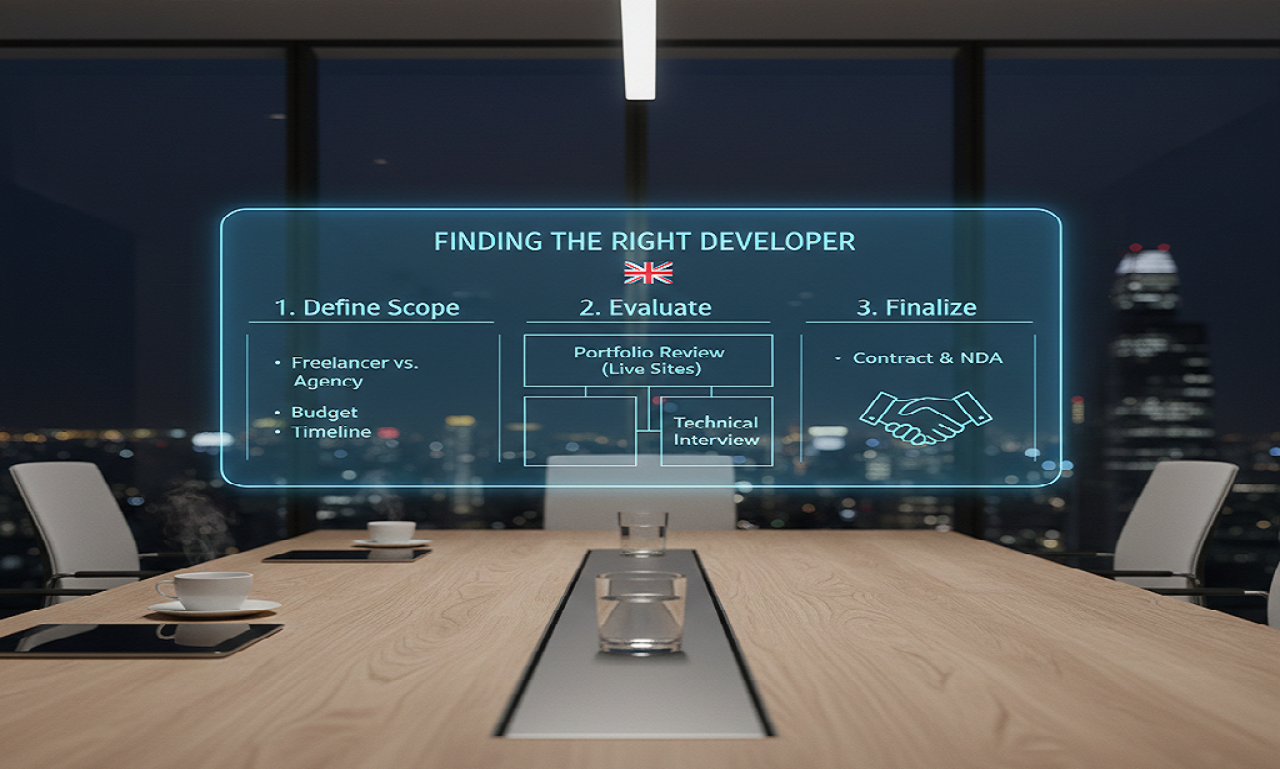
3. Finding the Right Developer
There are several avenues to explore when searching for a WordPress developer in the UK:
-
Freelance platforms: Websites like Upwork, Freelancer, and PeoplePerHour allow you to browse profiles and read reviews before hiring.
-
Job boards: Posting on job boards such as Indeed or Glassdoor can attract qualified candidates.
-
Agencies: Working with a web development agency can provide you with a team of experts, though this may be more expensive.
-
Networking: Attend tech meetups or WordPress-focused events to find developers through personal connections.
4. Interviewing Candidates
When you have a shortlist of potential candidates, conduct thorough interviews to assess their capabilities:
-
Request a portfolio: Review their past work to evaluate their style and proficiency.
-
Ask technical questions: Test their knowledge of WordPress development and problem-solving skills.
-
Discuss previous projects: Understand their experience with similar projects and any challenges they faced.
-
Cultural fit: Ensure they align with your company’s values and work culture.
5. Making the Offer
Once you’ve identified the ideal candidate, it’s time to extend an offer. Be clear about:
-
Compensation and benefits: Outline the salary, bonuses, or freelance rates and any additional perks.
-
Contract terms: Specify the project timeline, deliverables, and any other expectations.
-
Communication channels: Agree on how you will stay in touch throughout the project.
Final Thoughts
Your website is often the first impression a customer has of your business. Investing in a professional UK WordPress developer isn’t just about “fixing a site”—it’s about building a digital home that is secure, scalable, and ready to grow alongside you.